What it is
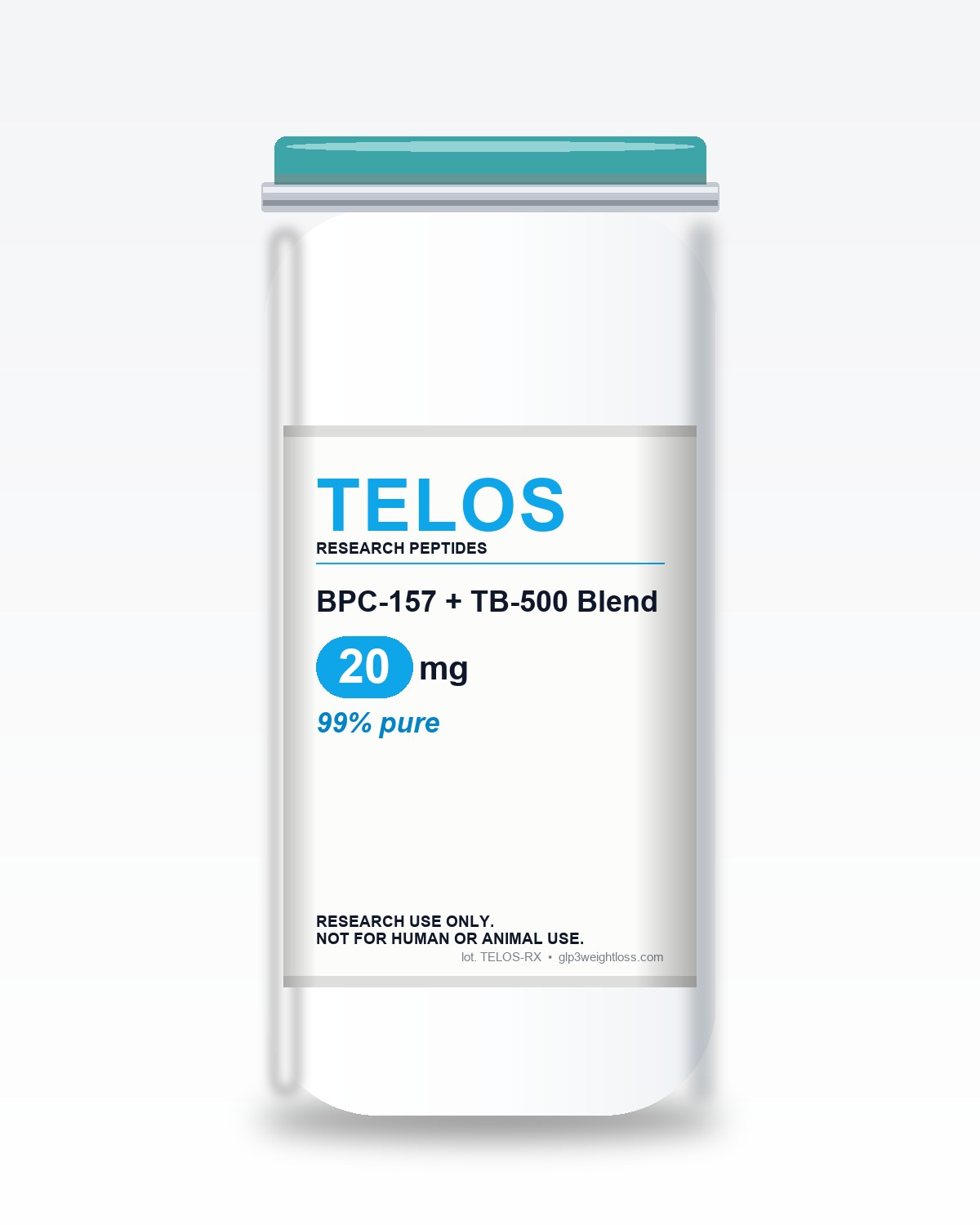
BPC-157 + TB-500 Blend (20mg) is supplied as a lyophilized reference compound for investigators in growth & recovery peptides research. Two-peptide blend pairing BPC-157 (pentadecapeptide) and TB-500 (thymosin-beta-4 fragment) in a single lyophilized vial. The combination is one of the most-cited research pairings in connective-tissue and soft-tissue repair literature.
Within published references, the compound is most often interrogated alongside controls that match its delivery vehicle and reconstitution buffer, with attention to lot-to-lot purity and identity verification before use in any quantitative assay.
Research applications
Documented research applications for BPC-157 + TB-500 Blend span several preclinical domains. The bullets below summarize commonly cited research questions; they do not constitute claims regarding human use, therapeutic effect, or any clinical outcome.
- Convergent tendon, ligament, and dermal repair signaling — preclinical assay endpoints and pathway-specific readouts.
- Angiogenic synergy — preclinical assay endpoints and pathway-specific readouts.
- Actin-cytoskeleton remodeling alongside nitric-oxide pathway interactions — preclinical assay endpoints and pathway-specific readouts.
- Comparative pharmacology versus the related research compounds listed below, in matched-vehicle preclinical models.
- Lot-to-lot reproducibility evaluations using HPLC, ESI-MS, and orthogonal functional assays.
Common research focus areas include Convergent tendon, ligament, and dermal repair signaling; angiogenic synergy; actin-cytoskeleton remodeling alongside nitric-oxide pathway interactions. Investigators routinely use BPC-157 + TB-500 Blend as a probe for these pathways and as a reference compound in comparative pharmacology against the related research summaries linked at the bottom of this page.
Quality specifications
Reference-grade BPC-157 + TB-500 Blend is characterized at minimum by reverse-phase HPLC purity (≥98% by HPLC for each constituent; ESI-MS verified), electrospray-ionization mass spectrometry confirming the expected monoisotopic mass, and quantitative amino-acid analysis where applicable. Cell-culture-grade lots additionally include endotoxin testing by Limulus amebocyte lysate (LAL) assay and bioburden screening. Each lot ships with a Certificate of Analysis itemizing purity, identity, residual solvents, water content (Karl Fischer), and counter-ion content where relevant.
Investigators working with new lots should request raw chromatograms and mass spectra prior to incorporating material into published work, and should validate ELISA or activity-assay readouts against orthogonal mass-spectrometric or functional methods.
Stability & handling
Lyophilized; reconstitute with bacteriostatic water; refrigerate after reconstitution; protect from oxidative stress and repeated freeze-thaw cycles. Working aliquots in active use are typically held at 2–8 °C for no more than 14 days, and freeze–thaw cycles should be minimized and documented in published methods. Storage history materially affects published phenotype magnitude and should be reported alongside dose and vehicle in any paper using this material.
Compliance & regulatory framing
This material is provided strictly for research and educational reference. The compound is supplied for in vitro investigation and laboratory characterization only and is not intended for human ingestion, injection, topical use, or any clinical application. Federal and state law treats research peptides and small molecules as non-therapeutic chemicals; recipients are responsible for compliance with all applicable institutional, state, and federal regulations governing handling, storage, and disposal. Order requests are reviewed by the research team and quoted privately; pricing, availability, and supply specifications are subject to change without notice.
For Research Use Only. Not for human or veterinary consumption, diagnostic procedures, or therapeutic use. Material is supplied to qualified investigators for laboratory and in vitro work. Recipients are responsible for compliance with all applicable institutional, state, and federal regulations.
Order & Certificate of Analysis
To request a quote for research-quantity orders or to ask for HPLC chromatograms, mass-spectrometry verification, or lot-specific COA, use the above. A team member will follow up within one business day to confirm pricing, shipping, and any documentation required.